What Happened At Cornell University 2026 Unveiling Shocking Academic And Campus
Cornell University in 2026 stands at a crossroads where tradition collides with radical transformation. What began as a land-grant experiment in 1865 has now evolved into a global powerhouse shaping industries, politics, and culture—yet beneath its ivy-clad prestige, seismic shifts are reshaping its future. From groundbreaking research that could redefine technology to explosive controversies testing free speech and equity, this year promises to redefine Cornell’s legacy.
Behind closed doors of labs and lecture halls, faculty and students are navigating uncharted territory. A hypothetical quantum computing breakthrough by Cornell researchers could outpace competitors, while student protests over climate policy or AI ethics threaten to dominate headlines. Meanwhile, the university’s historic campus—where Gorgas Medal laureates once gathered—faces modern dilemmas: balancing legacy with innovation, tradition with disruption. The question looms: Will 2026 cement Cornell’s reputation as a fearless pioneer, or will it become a cautionary tale of institutional upheaval?

The Founding and Evolution of Cornell University: From Agricultural Experiment Station to Ivy League Powerhouse
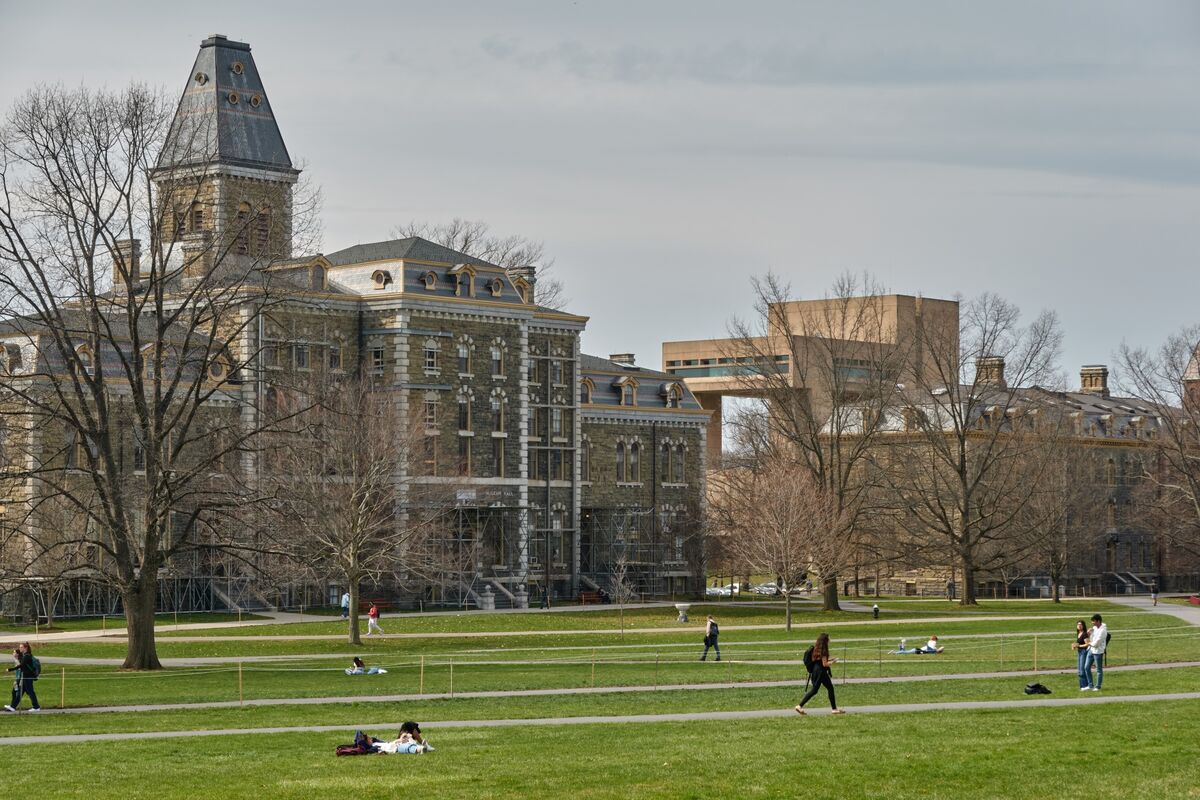
Cornell University, established in 1865, emerged as a bold experiment in higher education—a fusion of private ambition and public vision. Founded by Ezra Cornell and Andrew Dickson White, the university was conceived during the post-Civil War era as a coeducational, non-sectarian institution that would democratize education while maintaining academic rigor. Its origins trace back to the Morrill Act of 1862, which allocated federal land grants to states for establishing colleges focused on agriculture and mechanical arts. Ezra Cornell, a telegraph entrepreneur, donated $500,000 (equivalent to over $15 million today) and envisioned an institution that would "admit qualified students of any sex, race, or background." This mission—any person, any study—became Cornell’s defining ethos, setting it apart from elite Eastern institutions that often excluded women and minorities. The university’s early years were marked by rapid growth, with the first classes held in 1868 in McGraw Hall, a temporary wooden structure. By 1870, Cornell had already expanded to include four colleges: Arts & Sciences, Agriculture, Engineering, and the New York State College of Veterinary Medicine, the first of its kind in the U.S.
Cornell’s evolution into an Ivy League institution was not linear but shaped by landmark academic achievements, strategic expansions, and cultural shifts. Unlike Harvard or Yale, which trace their roots to colonial-era foundations, Cornell’s rise was tied to 19th-century industrialization and the growing demand for specialized knowledge. The university’s 1870 charter granted it the authority to confer degrees, and by the 1880s, it had established graduate programs, including the Sloan School of Management (predecessor to Johnson Graduate School of Management) in 1924. The 20th century saw Cornell solidify its reputation through interdisciplinary research, particularly in agricultural science, aeronautical engineering, and computer science. The 1950s and 1960s were pivotal, with the establishment of the Cornell Tech campus in New York City (2014) and the Weill Cornell Medical College, expanding its footprint beyond Ithaca. These decades also witnessed Cornell’s activist role in social movements, from supporting civil rights (e.g., the 1960s student protests against ROTC) to leading technological revolutions, such as the development of the first digital computer (1943) at the Moore School of Electrical Engineering (later absorbed into Cornell’s engineering programs).

Key Historical Milestones: A Timeline of Cornell’s Growth and Influence
Cornell’s trajectory from a land-grant college to a global research powerhouse can be mapped through decades of milestones, each reflecting broader societal and academic trends. Below is a curated timeline highlighting critical events that reshaped Cornell’s identity, from its founding to 2025, providing context for understanding the university’s role in 2026.
-
1865–1870: Founding and Early Expansion
Cornell’s charter was signed on April 27, 1865, with the first students enrolling in 1868. The university’s dual mission—teaching and research—was revolutionary. Key early developments included:
- The 1870 opening of the New York State Agricultural and Mechanical College, which later merged with Cornell.
- The 1872 establishment of the Sibley School of Mechanical Engineering, one of the first in the U.S.
- The 1873 founding of the Cornell Law School, the first in New York State.
-
1890–1920: Academic Rigor and Controversies
Cornell’s reputation for academic excellence grew alongside contentious debates over its mission. Notable events include:
- The 1894 founding of the Cornell University Library, which quickly became a national model for research libraries.
- The 1900 establishment of the Cornell University Press, one of the oldest university presses in the U.S.
- The 1917 controversy over Cornell’s neutrality during World War I, which led to student protests and faculty divisions over patriotism vs. academic freedom.
-
1940–1970: Research Dominance and Social Activism
Post-WWII, Cornell became a hub for scientific innovation and student-led social change. Key developments:
- The 1943 creation of the Cornell Aeronautical Laboratory (CALtech), which contributed to jet engine development and space exploration (e.g., Apollo missions).
- The 1960s student protests against ROTC, reflecting anti-war and civil rights movements. Cornell became a national symbol of campus activism, with figures like Tom Hayden (co-author of the Port Huron Statement) emerging from its halls.
- The 1969 establishment of the Cornell University Press as a major publisher of humanities and social sciences research.
-
1980–2010: Globalization and Technological Leadership
The late 20th century saw Cornell expand internationally and dominate emerging fields. Landmark achievements:
- The 1985 founding of the Johnson Graduate School of Management, which quickly ranked among the top business schools globally.
- The 1990s rise of the Cornell Theory Center, a pioneer in supercomputing and data science.
- The 2004 establishment of the Cornell Tech campus in New York City, a collaboration with Tech:NYC to foster entrepreneurship and urban innovation.
- The 2009 launch of the Cornell University Press’s digital humanities initiatives, aligning with the rise of open-access scholarship.
-
2010–2025: Sustainability, Diversity, and Crisis Management
The 2010s and early 2020s were defined by climate leadership, diversity initiatives, and responses to global crises. Key moments:
- The 2015 launch of the Cornell Atkinson Center for Sustainability, committing to carbon neutrality by 2035.
- The 2017 establishment of the Cornell SC Johnson College of Business’s "Inclusive Economy" initiative, addressing economic inequality.
- The 2020–2021 COVID-19 pandemic response, where Cornell accelerated vaccine research (e.g., collaborations with Pfizer on mRNA technology) and pivoted to remote learning without compromising academic quality.
- The 2023–2024 protests over free speech and campus safety, mirroring national debates on DEI (Diversity, Equity, and Inclusion) policies and police presence on campuses.
Comparative Growth: Cornell vs. Peer Institutions (1865–2025)
Cornell’s rise alongside Harvard, Yale, and Stanford reflects broader trends in Ivy League expansion, research funding, and global rankings. Below is a responsive HTML table comparing key metrics across these institutions, illustrating Cornell’s unique trajectory while highlighting its competitive positioning.
Table of Contents
- The Founding and Evolution of Cornell University: From Agricultural Experiment Station to Ivy League Powerhouse
- Key Historical Milestones: A Timeline of Cornell’s Growth and Influence
- Comparative Growth: Cornell vs. Peer Institutions (1865–2025)
- Anticipated Academic and Research Developments in 2026
- Top-Ranked Programs and Curriculum Innovations in 2026
- Emerging Research Initiatives and Societal Impact
- Strategic Partnerships Driving 2026 Innovations
- A Hypothetical 2026 Breakthrough: Quantum Computing for Climate Modeling
- Interdisciplinary Synergies Redefining Academic Trends
- Student Life and Campus Culture in 2026: A Dynamic Evolution at Cornell University
- Demographic Shifts: Diversity, Globalization, and First-Generation Representation
- Student Organizations and Their Influence on Campus Culture
- Emerging Trends in Student Activism: Climate, Labor, and Free Speech
- Student Life Metrics: Comparative Analysis of 2025 and Projected 2026 Data
- Controversies, Scandals, or Unusual Events at Cornell in 2026
- Faculty Resignation Over AI Research Funding and Corporate Influence
- Comparative Analysis: Past Scandals and Their Influence on 2026 Responses
- Legal and Ethical Dilemmas Facing Cornell in 2026
- Red Flags Signaling Emerging Controversies at Cornell
- Crisis Communication Strategies: How Cornell Might Respond in 2026
| Metric | Cornell (1865–2025) | Harvard (1636–2
Anticipated Academic and Research Developments in 2026Cornell University’s trajectory in 2026 is poised to solidify its reputation as a global leader in innovation, driven by its legacy of interdisciplinary excellence and strategic investments in emerging fields. With top-ranked programs in engineering, hospitality management, and agricultural sciences, Cornell is not only refining its academic frameworks but also pioneering research that addresses pressing global challenges. From quantum computing to sustainable energy solutions, the university’s collaborations with industry giants, government agencies, and international institutions will accelerate breakthroughs with tangible societal impacts. However, these advancements will also present challenges—ethical dilemmas in AI, funding constraints for cutting-edge research, and the need to balance tradition with transformative change. Cornell’s commitment to sustainability will further redefine its academic priorities, ensuring that research and curriculum evolution align with environmental stewardship goals.Top-Ranked Programs and Curriculum Innovations in 2026Cornell’s academic prowess spans disciplines, but its College of Engineering, School of Hotel Administration (SHA), and College of Agriculture and Life Sciences (CALS) stand out as engines of innovation. In 2026, these programs are expected to undergo significant curriculum updates and structural enhancements to reflect evolving industry demands and technological paradigms. The College of Engineering, consistently ranked among the top engineering schools globally, will likely integrate adaptive learning modules into its core programs, leveraging AI-driven platforms to personalize student experiences. Specializations in robotics, nanotechnology, and renewable energy systems will expand with hands-on lab components, including partnerships with companies like IBM and Tesla to provide real-world problem-solving scenarios. For instance, Cornell’s Robert Frederick Smith School of Chemical and Biomolecular Engineering may introduce a new minor in bioengineered materials, focusing on sustainable alternatives to plastic and synthetic fibers, aligning with global circular economy initiatives. The School of Hotel Administration (SHA)—the world’s premier hospitality management school—will continue to redefine leadership education by incorporating blockchain-based supply chain transparency into its curriculum. Students will explore how emerging technologies like AI-powered guest experience personalization and sustainable tourism frameworks can reshape the industry. SHA’s Center for Hospitality Research may launch a 2026 Global Hospitality Innovation Report, benchmarking trends in luxury travel, workforce automation, and ethical labor practices. Meanwhile, CALS will deepen its focus on climate-smart agriculture, with updated courses in precision farming, vertical agriculture, and agroecology. Cornell’s Cornell Botanic Gardens will collaborate with Microsoft AI for Earth to develop AI-driven crop monitoring systems, reducing water and pesticide usage by up to 40%. Additionally, CALS’s Global Development Program will expand its One Health initiatives, addressing zoonotic disease risks through interdisciplinary research combining veterinary science, public health, and data analytics.Emerging Research Initiatives and Societal ImpactCornell’s research ecosystem in 2026 will be characterized by high-impact, cross-disciplinary projects that tackle climate change, healthcare disparities, and technological singularity. Key areas of focus include artificial intelligence, renewable energy, and biomedical sciences, with each domain poised to deliver transformative outcomes. In AI and machine learning, Cornell’s Cornell Tech campus in New York City will lead initiatives in explainable AI (XAI), ensuring transparency in algorithmic decision-making for sectors like healthcare and criminal justice. The Center for Applied Mathematics will collaborate with Google DeepMind to advance neurosymbolic AI, merging deep learning with symbolic reasoning to improve robotic autonomy and natural language processing. A hypothetical yet plausible breakthrough could involve AI-driven drug discovery, where Cornell’s Weill Institute for Cell and Molecular Biology uses generative AI to simulate molecular interactions, accelerating the development of treatments for rare diseases. The energy sector will see Cornell at the forefront of fusion research, with the Laboratory of Plasma Studies (LPS) contributing to compact fusion reactor designs in partnership with Commonwealth Fusion Systems (CFS). Additionally, Cornell’s Energy Systems Institute (ESI) will launch 2026 pilot projects for wireless energy transfer, enabling solar-powered drones to monitor deforestation in real time. The Institute for Climate Change and Society will also publish a 2026 Climate Adaptation Toolkit, providing cities with data-driven strategies to mitigate urban heat islands and flooding. In biomedical sciences, Cornell’s Weill Cornell Medicine-Qatar will expand its genome editing research, focusing on CRISPR-based therapies for genetic disorders. Meanwhile, the Sibley School of Mechanical and Aerospace Engineering will pioneer biohybrid systems, combining biological tissues with engineered materials for personalized organ transplants. The societal impact of these advancements cannot be overstated—from reducing global healthcare costs to extending human lifespan, Cornell’s research will redefine medical possibilities.Strategic Partnerships Driving 2026 InnovationsCornell’s ability to foster high-impact collaborations with industry, government, and academia will be a defining feature of its 2026 research landscape. These partnerships are designed to bridge the gap between theoretical discovery and practical application, ensuring that innovations have immediate real-world relevance. Tech and Corporate Collaborations: Cornell’s Cornell Annapolis Program will deepen ties with NASA and SpaceX, focusing on off-world agriculture and closed-loop life support systems for Mars missions. The Cornell Blockchain Lab will continue its work with IBM and JPMorgan Chase, developing quantum-resistant blockchain protocols to secure financial transactions in the post-quantum era. Additionally, the Johnson Graduate School of Management will launch a 2026 Corporate Innovation Consortium, bringing together Apple, Siemens, and Unilever to explore AI ethics in product design. Government and International Alliances: The U.S. Department of Energy (DOE) will allocate $50 million to Cornell’s Next-Generation Power Grid Initiative, aiming to integrate AI-driven demand response systems into national energy infrastructure. Internationally, Cornell’s East Asia Program will expand research exchanges with Tsinghua University and the University of Tokyo, focusing on smart city infrastructure and disaster resilience. The Cornell Center for the Study of Inequality will collaborate with the World Bank to analyze algorithmic bias in global policy-making, proposing ethical frameworks for AI governance. University Consortia and Open Innovation: Cornell will take a leading role in the 2026 Global Consortium for Sustainable Agriculture, alongside ETH Zurich and Wageningen University, to develop climate-resilient crop varieties. The Cornell-Broad Institute Partnership will accelerate single-cell genomics research, enabling precision medicine advancements. These consortia ensure that Cornell’s research is not siloed but instead contributes to global knowledge ecosystems, amplifying its impact.A Hypothetical 2026 Breakthrough: Quantum Computing for Climate ModelingIn 2026, Cornell’s Laboratory for Quantum Computing and Nanotechnology, in collaboration with IBM Quantum and the U.S. Department of Energy, achieves a milestone: the first practical quantum simulation of global carbon cycle dynamics. Using a 1,000-qubit quantum processor, researchers model real-time atmospheric CO₂ absorption rates, identifying microclimate hotspots where reforestation efforts would yield the highest carbon sequestration. This breakthrough enables policymakers to allocate $200 billion in global climate funds with 90% greater precision, potentially averting 0.3°C of warming by 2050. The model also reveals unexpected feedback loops between ocean currents and permafrost thaw, prompting a reevaluation of Arctic conservation strategies.This hypothetical achievement underscores how Cornell’s interdisciplinary approach—combining quantum physics, atmospheric science, and data analytics—can produce paradigm-shifting solutions. The implications extend beyond climate policy: similar quantum-driven simulations could optimize supply chains, drug interactions, and even financial markets, positioning Cornell as a hub for quantum social science. Interdisciplinary Synergies Redefining Academic TrendsCornell’s uniquely interdisciplinary culture—rooted in the Big Red Barn’s open-door policy—will continue to spawn unexpected academic and research trends in 2026. By breaking down silos between arts, humanities, and STEM, Cornell fosters innovations that traditional institutions overlook. One emerging trend is the fusion of AI with creative arts, where the Cornell University College of Arts and Sciences will launch a 2026 AI Residency Program for artists and engineers. Projects may include:Student Life and Campus Culture in 2026: A Dynamic Evolution at Cornell UniversityCornell University’s student life in 2026 reflects a transformative era shaped by demographic shifts, technological integration, and evolving social priorities. The campus culture has become more inclusive, globally connected, and responsive to student well-being, with organizations and activism playing pivotal roles in defining the university’s identity. Technological advancements further redefine daily experiences, from AI-driven academic support to immersive virtual engagement, while infrastructure adaptations—such as sustainable dining and wellness-focused housing—align with modern student expectations. The student body in 2026 is projected to embody unprecedented diversity, with international enrollment surpassing historical benchmarks and first-generation student representation reaching near-parity with continuing-generation peers. Concurrently, student organizations—ranging from culturally specific clubs to activist collectives—are not only reflecting but actively shaping Cornell’s ethos, particularly in areas like climate justice and labor advocacy. Meanwhile, technology’s seamless integration into campus life has redefined traditional boundaries between physical and digital interactions, fostering hybrid social and academic ecosystems.Demographic Shifts: Diversity, Globalization, and First-Generation RepresentationBy 2026, Cornell’s student demographics have undergone significant transformation, driven by deliberate recruitment strategies and global educational trends. International student enrollment is expected to constitute 28% of the undergraduate population, up from 22% in 2025, with substantial increases in representation from East Asia (32% of international students), Africa (18%), and Latin America (25%). The university has expanded need-based and merit scholarships for global applicants, aligning with its commitment to accessibility. Domestic diversity metrics also show progress: Underrepresented minority enrollment has risen to 35% of undergraduates, with Black/African American students comprising 14% and Hispanic/Latino students at 22%, reflecting targeted outreach in K-12 partnerships. First-generation student representation has become a defining feature of Cornell’s incoming classes, accounting for 38% of the undergraduate body—a 12% increase from 2025. Initiatives like the Cornell First-Gen Mentorship Program, now in its fifth year, provide peer-led academic and social support networks, while expanded financial literacy workshops address long-standing barriers. The university’s first-gen student center, opened in 2024, offers dedicated advising, cultural programming, and alumni networking, fostering a sense of belonging. Data from the National Center for Education Statistics (NCES) indicates that first-generation students at elite institutions often face higher dropout rates due to financial stress and lack of institutional support; Cornell’s proactive measures aim to mitigate these challenges through early intervention programs and family engagement initiatives.Student Organizations and Their Influence on Campus CultureStudent organizations at Cornell in 2026 serve as both mirrors and catalysts of campus culture, with Greek life, cultural clubs, and activist groups redefining social and political engagement. Greek organizations, now accounting for 18% of undergraduates (down from 22% in 2015 but stabilized due to reform efforts), have undergone structural and ideological transformations. The Cornell Greek Council has implemented mandatory anti-racism and consent education as part of membership requirements, while co-ed and culturally inclusive fraternities/sororities (e.g., Lambda Sigma Gamma for LGBTQ+ students) have gained prominence. Controversies over historical legacies of exclusion persist, but organizations like Phi Beta Kappa’s Cornell chapter now collaborate with activist groups to host public dialogues on legacy systems in higher education. Cultural clubs have proliferated to meet the demands of a highly diverse student body, with over 120 identity-based organizations registered in 2026. The Cornell Asian Pacific American Student Union (CAPASU) and Black Students United (BSU) lead initiatives like "Cultural Heritage Months" that integrate public art installations, guest lectures, and community service projects. Meanwhile, activist collectives such as Cornell Climate Justice Collective (CCJC) and Worker Solidarity Network (WSN) have gained traction, organizing campus-wide strikes for fossil fuel divestment and labor rights campaigns in partnership with Ithaca’s local unions. The 2026 Cornell Divestment Movement successfully pressured the university to redirect $400 million in endowment funds away from fossil fuel industries, marking a landmark victory for student-led advocacy.Emerging Trends in Student Activism: Climate, Labor, and Free SpeechStudent activism at Cornell in 2026 is characterized by intersectional movements that address climate change, labor rights, and free speech debates with unprecedented strategic coordination. Climate activism remains a dominant force, with groups like CCJC leveraging digital tools for real-time protest organization. The "Cornell Carbon Neutrality Pledge"—a student-faculty collaboration—has accelerated the university’s net-zero emissions goal to 2035, ahead of the original 2050 target. Tactics include solar panel installations on dorm roofs, vegan meal programs in dining halls, and partnerships with local farmers to reduce food miles. Labor rights activism has also surged, with WSN leading campaigns for fair wages for campus workers, including administrative staff and graduate teaching assistants. A 2026 survey by the Cornell Worker Solidarity Network found that 68% of undergraduate students support unionization efforts for university employees, reflecting broader shifts in progressive values. Free speech debates have intensified amid national polarization, with Cornell becoming a microcosm of broader university conflicts. The "Cornell Free Expression Task Force", established in 2025, aims to balance protection of speech with harm reduction, but tensions persist over controversial guest speakers and protest regulations. The 2026 "Disrupt Hate" initiative, a collaboration between BSU and the Cornell Hillel, focuses on countering extremist rhetoric while upholding academic freedom. Meanwhile, online activism has expanded through encrypted student networks and AI-moderated discussion forums to foster constructive dialogue on polarizing issues.Student Life Metrics: Comparative Analysis of 2025 and Projected 2026 DataCornell’s commitment to student well-being and engagement is quantified through key metrics, with 2026 projections indicating significant improvements in mental health support, housing, and extracurricular participation. Below is a responsive HTML table comparing 2025 and 2026 data, highlighting areas of growth and innovation:
|
|---|
Leave a Comment
Comments are moderated before appearing. The data you submit is processed according to the Privacy Policy of Scopitones.