What Does Turning Tricks Mean Exploring Its Meaning Culture and Impact
Behind the casual phrase "turning tricks" lies a rich tapestry of physical prowess, cultural expression, and linguistic evolution. From skateboarders defying gravity to dancers bending space-time on stage, the term transcends its literal roots, embedding itself in sports, arts, and even digital realms. What begins as a simple combination of movement and skill morphs into a global phenomenon, reflecting how societies celebrate creativity and mastery across disciplines.
The origins of "turning tricks" stretch back centuries, tied to jesters in royal courts and acrobats in circus tents, yet its modern iterations thrive in urban streets and virtual worlds. Whether executed on a halfpipe, a dance floor, or a gaming console, the phrase captures the universal human drive to push boundaries. This exploration dissects its layered meanings—from the physics of a skateboard flip to the metaphorical "tricks" of marketing gurus—revealing how a single idiom bridges physical skill, cultural identity, and technological innovation.
Understanding the Core Meaning of "Turning Tricks"

The phrase "turning tricks" is a vivid expression that blends physical agility with creative execution, originating from both literal and figurative contexts. At its core, the term describes the act of performing maneuvers, often with skill or flair, that require precision, balance, or innovation. While its roots are deeply embedded in physical activities, the phrase has evolved to encompass broader applications in problem-solving, artistry, and even business strategies. To fully grasp its meaning, it’s essential to dissect its components—"turning" and "tricks"—and explore how their combination creates a dynamic, adaptable concept. This section examines the literal and metaphorical interpretations of the phrase, its usage across languages, and its evolution into slang and specialized jargon.
Literal Definition and Physical Maneuvers
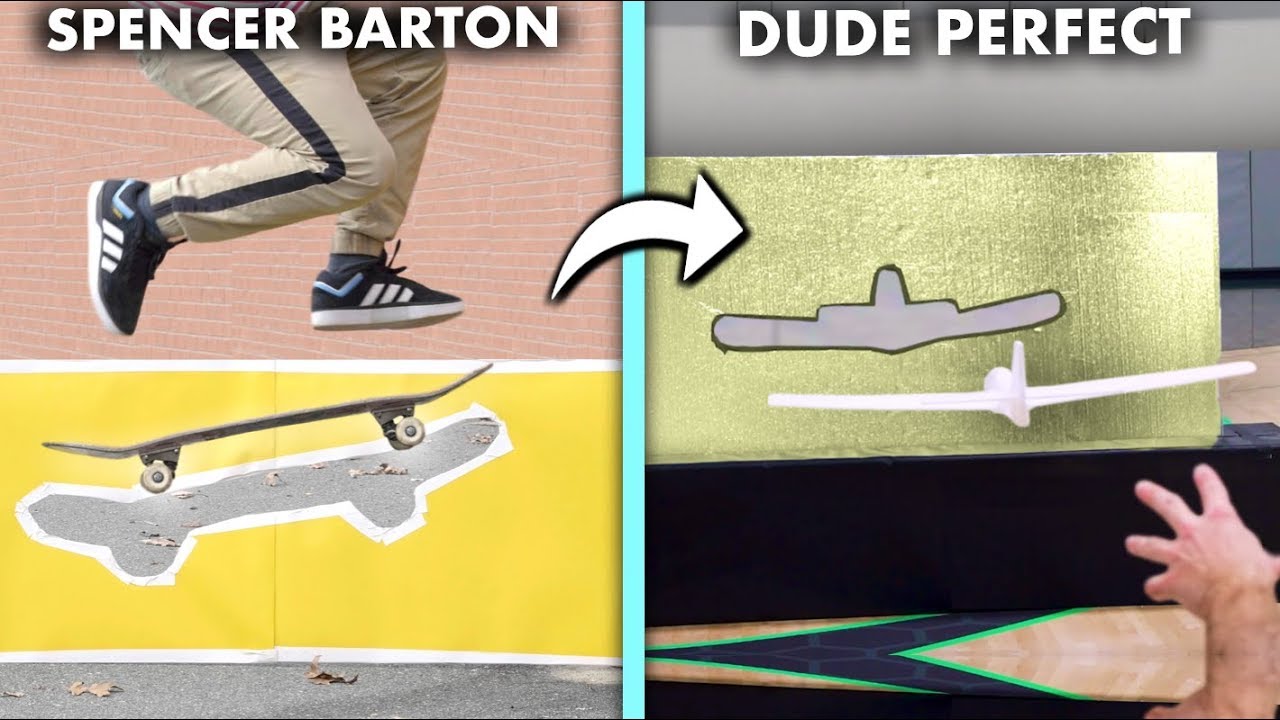
"Turning tricks" in its most basic form refers to executing physical movements or techniques that demonstrate skill, often in sports, dance, or performance arts. The word "turning" implies rotation, pivoting, or shifting direction, while "tricks" denotes specialized, often impressive, maneuvers. Together, they describe actions that go beyond standard movements, requiring practice and expertise. For example: - In skateboarding, "turning tricks" involves executing spins, flips, or aerial stunts like the kickflip or ollie. - In breakdancing, it refers to intricate footwork, freezes, and spins such as the windmill or headspin. - In martial arts, techniques like sweeping kicks or backflips in taekwondo or capoeira are considered tricks when performed with precision.
These maneuvers are not merely functional; they are often performed for entertainment, competition, or personal expression. The phrase emphasizes the artistry of movement, where physicality meets creativity.
Linguistic Breakdown: "Turning" and "Tricks" Combined
To understand the phrase’s depth, it’s helpful to analyze its components separately before examining their synthesis.
Table of Contents
- Understanding the Core Meaning of "Turning Tricks"
- Literal Definition and Physical Maneuvers
- Linguistic Breakdown: "Turning" and "Tricks" Combined
- Everyday Usage in Casual Conversations
- Comparative Analysis: "Turning Tricks" Across Languages
- Historical and Cultural Context of "Turning Tricks"
- Origins in Performance Traditions: From Jesters to Circus Acts
- Key Moments in Pop Culture: From Skateboards to Breakdancing
- Cultural Anecdotes: Martial Arts and Indigenous Performances
- Famous Quotes and Literary References
- Urban vs. Rural Perceptions: Dialects and Regional Variations
- Visual Symbols of "Turning Tricks" Across Eras
- Turning Tricks in Sports and Physical Activities: Mastery of Physics and Precision
- Physics Principles Behind Tricks: The Science of Defying Gravity
- Step-by-Step Breakdown: From Basic to Advanced Tricks
- Iconic Tricks Across Disciplines: Difficulty Levels and Cultural Impact
- Skill Progression: Skateboarding vs. Gymnastics—Convergence of Training Methods
- Turning Tricks in Dance and Performance Arts
- Signature Moves and Cultural Origins in Dance
- Expert Perspectives on Incorporating Tricks into Performance
- Physical and Mental Training for Dance Tricks
- Stage Design and Props Enhancing the Illusion of Turning Tricks
- Turning Tricks in Technology and Digital Worlds
- Input Tricks and Frame Data Manipulation in Competitive Gaming
- Glitches, Exploits, and Cheat Codes as Digital Tricks
- Augmented and Virtual Reality Tricks: Physicality in Digital Spaces
- Comparing Learning Curves: Digital vs. Physical Tricks
- Esports and Gaming Communities Celebrating Digital Tricks
- Futuristic Technologies Redefining Trick Execution
- "Turning" originates from Old English turnian, meaning "to rotate" or "change direction." It implies motion with intentionality, often involving balance or coordination. In modern usage, "turning" can mean: - Rotating an object (e.g., turning a somersault). - Shifting direction (e.g., turning a corner in a race). - Altering a process or outcome (e.g., turning a profit in business).
- "Tricks" derives from Middle English tricke, referring to a "deceptive maneuver" or "clever feat." Over time, its meaning expanded to include: - Skillful or entertaining stunts (e.g., magic tricks). - Cunning strategies (e.g., a legal trick to win a case). - Informal, often playful, techniques (e.g., a skateboarder’s trick).
When combined, "turning tricks" merges the physicality of rotation or movement with the creativity or deception of a trick. The result is a concept that celebrates mastery of form, whether in athletics, performance, or even everyday tasks. For instance, a chef "turning tricks" in the kitchen might refer to executing complex techniques like sous-vide cooking or flambéing, where precision turns a simple dish into a showpiece.
Everyday Usage in Casual Conversations
The phrase "turning tricks" appears frequently in informal contexts, often to describe impressive or skillful actions. Its usage varies by activity but consistently conveys expertise and flair. Below are common scenarios where the term is applied:
- Sports and Athletics Athletes use the phrase to highlight standout performances. For example:
- A basketball player "turning tricks" might execute a behind-the-back pass or a no-look dunk.
- A gymnast "showing off tricks" could be performing a series of dismounts with varying rotations. The term here underscores technical skill and audience appeal.
-
Dance and Performance Arts
In dance, "turning tricks" refers to choreographed moves that push physical limits. A dancer might say:
"She’s been practicing her turns—now she’s nailing all the tricks in the routine."
This usage emphasizes rehearsal, precision, and spectacle. - Skateboarding and Extreme Sports Skateboarders and snowboarders frequently use the phrase to describe stunts. For example:
- "Did you see him land that 360 flip? He’s really turning tricks out there." The term here is synonymous with difficulty and style, often used to praise innovation.
- Everyday Problem-Solving In non-physical contexts, the phrase can describe clever solutions. For instance:
- "She turned a simple recipe into a gourmet meal—total tricks in the kitchen!" Here, "tricks" implies creative adaptation rather than literal movement.
The versatility of the phrase stems from its ability to transcend the physical, making it adaptable to any field where skill and creativity intersect.
Comparative Analysis: "Turning Tricks" Across Languages
Language shapes how cultures perceive and describe actions like "turning tricks." Below is a table comparing the phrase’s equivalents in Spanish, French, and German, highlighting linguistic and cultural nuances:
| Language | Literal/Figurative Equivalent | Cultural Context | Example Usage | |||||||||||||||||||||||||||||||||||||||||||||||||||||||||||||||||||||||||||||||||||||||||||||
|---|---|---|---|---|---|---|---|---|---|---|---|---|---|---|---|---|---|---|---|---|---|---|---|---|---|---|---|---|---|---|---|---|---|---|---|---|---|---|---|---|---|---|---|---|---|---|---|---|---|---|---|---|---|---|---|---|---|---|---|---|---|---|---|---|---|---|---|---|---|---|---|---|---|---|---|---|---|---|---|---|---|---|---|---|---|---|---|---|---|---|---|---|---|---|---|---|
| Spanish |
|
In Spanish-speaking cultures, "trucos" can imply both physical stunts (e.g., skateboarding) and deceptive tactics (e.g., "un truco legal" = a legal loophole). "Piruetas" is often used in dance or circus contexts. |
"El patinador hace trucos increíbles en el parque." (The skateboarder does incredible tricks in the park.) |
|||||||||||||||||||||||||||||||||||||||||||||||||||||||||||||||||||||||||||||||||||||||||||||
| French |
|
French distinguishes between "figures" (structured moves, like in figure skating) and "tours" (tricks or illusions). The term "coups" is versatile, used in both sports and business (e.g., "faire un coup marketing" = to pull off a marketing stunt). |
"Le patineur fait des figures acrobatiques sur la glace." (The skater does acrobatic figures on the ice.) |
|||||||||||||||||||||||||||||||||||||||||||||||||||||||||||||||||||||||||||||||||||||||||||||
| German |
|
German uses "Tricks" broadly, but "Finten" (from fencing) implies strategic deception, common in sports like soccer. "Stunts" is borrowed from English and used in action films or extreme sports. |
"Der Skateboarder dreht immer neue Stunts." (The skateboarder keeps pulling off new stunts.) |
| Sport | Trick | Athlete | Difficulty Level (1-10) | Year Achieved | Cultural Impact |
|---|---|---|---|---|---|
| Skateboarding | 900 (900-degree spin) | Tony Hawk | 10 | 2012 (X Games) | Cemented Hawk as a legend; proved mental and physical limits in skateboarding. The trick became a symbol of perseverance, as Hawk attempted it for over a decade. |
| Snowboarding | Double McTwist 1260 (5.5 rotations) | Sebastian Toutant | 10 | 2021 (Winter X Games) | Redefined aerial snowboarding’s boundaries; Toutant’s trick was the first of its kind, inspiring a wave of 3D (triple-twisting) maneuvers in the sport. |
| BMX | Double Backflip | Mat Hoffman | 9 | 2001 (BMX World Championships) | Hoffman’s backflips revolutionized BMX freestyle, blending skateboarding influences with bike tricks. His performances popularized BMX as a mainstream sport. |
| Skateboarding | Kickflip | Nyssen Klein | 7 | 1983 (Early skateboarding era) | Considered the first modern flip trick, the kickflip democratized aerial skateboarding, making it accessible to a broader audience. |
| Snowboarding | McTwist (Triple Twist) | Shaun White | 8 | 2006 (Winter Olympics) | White’s mastery of the McTwist solidified his status as a GOAT (Greatest of All Time), influencing generations of snowboarders to attempt 3D tricks. |
Skill Progression: Skateboarding vs. Gymnastics—Convergence of Training Methods
While skateboarding and gymnastics both demand balance, strength, and precision, their training methodologies diverge in key ways. Skateboarding emphasizes progressive trick-building, where riders learn foundational moves (e.g., ollies, shuvits) before combining them into complex sequences. Gymnastics, conversely, follows a structured curriculum with set skills (e.g., handstands, cartwheels) that must be mastered before advancing to apparatus-specific routines. Similarities:
Differences:
Turning Tricks in Dance and Performance Arts
Dance transforms the human body into a canvas of motion, where "turning tricks" becomes an art form blending athleticism, storytelling, and cultural expression. Unlike structured athletic maneuvers, dance tricks emphasize fluidity, emotional resonance, and creativity, often defying gravity while maintaining harmony with rhythm. From the breakneck spins of breakdancing to the ethereal lifts in contemporary ballet, these techniques redefine physical limits and push the boundaries of performance. The evolution of dance tricks reflects societal shifts, technological advancements, and the fusion of global movements into a universal language of movement.
Signature Moves and Cultural Origins in Dance
Dance tricks are deeply rooted in cultural narratives, each carrying historical weight and artistic innovation. For instance, Michael Jackson’s moonwalk, popularized in the 1980s, originated from the "backslide" move by Jeffery Daniel, a dancer influenced by James Brown’s stage presence. The moonwalk’s global appeal lies in its illusion—making it seem as though Jackson defies physics by sliding backward while facing forward. Similarly, Busy Izzy’s floorwork in hip-hop, particularly his "Izzy Whip" and "Crab Walk," stems from the 1970s New York City b-boy culture, where dancers like him pioneered groundbreaking maneuvers by combining gymnastics, martial arts, and street-smart agility. In contemporary dance, Isadora Duncan’s "free-flowing" spins symbolized rebellion against rigid ballet conventions, while Martha Graham’s contraction-release technique introduced a raw, emotional dimension to turning tricks. These moves were not just physical feats but reflections of artistic revolutions—Duncan’s ethereal twirls mirrored ancient Greek ideals of natural movement, while Graham’s sharp, angular turns embodied psychological depth. The cultural cross-pollination is evident in Indian Kathak’s "chakkars" (spinning jumps), which fuse Sufi mysticism with technical precision, or Cape Dance’s "Gumboot Dance," where miners in South Africa used rhythmic stomps and spins to communicate underground.
Expert Perspectives on Incorporating Tricks into Performance
Choreographers and dancers approach turning tricks as a synthesis of discipline and spontaneity. Savion Glover, a pioneer of tap dance’s athletic revival, emphasizes that tricks should serve the narrative: > "A trick isn’t just about doing something hard—it’s about making the audience feel something. When I perform my ‘flap’ or ‘wing’ moves, I’m not just showing off; I’m telling a story about struggle, joy, or resistance. The physics are there, but the soul is what makes it dance." Glover’s technique involves weight distribution mastery—shifting balance from the balls of the feet to heels in milliseconds—while maintaining a connection to the music’s emotional pulse. His training regimen includes plyometric jumps to build explosive power and mental visualization, where he replays sequences in his mind to refine muscle memory. This dual focus on physical and mental preparation is echoed in breakdancing, where dancers like Shock Topi (a founding member of the Rock Steady Crew) blend handstands, windmills, and backspins with improvisational storytelling. In competitive dance, tricks are judged on execution, creativity, and technical difficulty, whereas freestyle environments prioritize originality and audience engagement. For example, in hip-hop battles, a dancer’s ability to invent a trick on the spot—like a "dime" (a one-handed handstand with a leg lift)—can shift the momentum of a performance. Conversely, in contemporary dance competitions, judges scrutinize how tricks integrate with emotional expression, often deducting points if a spin or lift feels mechanical rather than purposeful.
Physical and Mental Training for Dance Tricks
Mastering dance tricks requires a holistic training approach, balancing strength, flexibility, and mental acuity. Below is a breakdown of essential components:
| Training Focus | Key Exercises | Cultural/Technical Origins |
|---|---|---|
| Flexibility |
|
Inspired by classical ballet’s grand plié and Indian Kathak’s deep lunges. |
| Strength |
|
Rooted in capoeira’s acrobatic rolls and breakdancing’s power moves. |
| Balance |
|
Critical in ballet’s pirouettes and parkour’s precision jumps. |
| Mental Visualization |
|
Used in martial arts’ kata (pre-arranged forms) and contemporary dance’s improvisation. |
Dancers often incorporate cross-training—such as parkour for spatial awareness or martial arts for fluid transitions—to enhance their trick repertoire. Injuries are mitigated through progressive overload, where complex moves are broken into smaller, manageable parts before full execution.
Stage Design and Props Enhancing the Illusion of Turning Tricks
The magic of dance tricks is amplified by stagecraft, where lighting, mirrors, and props create illusions that redefine physical limits. In Michael Jackson’s "Smooth Criminal" performance, the anti-gravity lean was achieved through a hidden hydraulic mechanism in his shoes, synced with his movements to simulate defying gravity. Similarly, Cirque du Soleil’s "O" show uses projection mapping to make dancers appear to float mid-air during spins, blending real athleticism with digital enhancement. Mirrors play a pivotal role in contemporary dance, where reflective surfaces can distort perceptions of movement. For example, Dutch choreographer Anne Teresa De Keersmaeker uses split-level mirrors to create fragmented reflections, making a dancer’s turns seem disjointed or multiplied. In hip-hop, LED panels behind performers can cast dynamic shadows, turning a simple spin into a light-and-motion spectacle, as seen in Beyoncé’s "Formation" choreography. Props like hoops (in hula or breakdancing) or silks (in aerial dance) extend the range of tricks. A hoop spinner’s ability to balance a hoop on their neck or between their feet relies on centrifugal force mastery, while aerial silks artists perform inverted spins by distributing weight across fabric loops. The integration of props often requires additional training, such as circus arts for strength or yoga for flexibility, to execute tricks safely at heights. In immersive theater, dancers use interactive stage elements—like moving platforms or suspended harnesses—to execute tricks that would be impossible on flat ground. For instance, Punchdrunk’s "The Burnt City" features performers who climb walls and balance on precarious structures, blending dance with theater to create a surreal, trick-driven narrative.
Turning Tricks in Technology and Digital Worlds
The phrase "turning tricks" has transcended physical realms to dominate digital landscapes, where precision, creativity, and system manipulation redefine skill mastery. In gaming, augmented reality (AR), and virtual reality (VR), players and developers leverage algorithms, motion tracking, and haptic feedback to execute virtual feats that rival—or even surpass—the complexity of real-world tricks. From exploiting game mechanics in competitive esports to performing gravity-defying moves in immersive simulations, digital trickery blends technical prowess with artistic expression. The evolution of these skills mirrors broader technological advancements, where artificial intelligence (AI) and brain-computer interfaces (BCIs) are poised to revolutionize how tricks are learned, executed, and celebrated in virtual environments.
Input Tricks and Frame Data Manipulation in Competitive Gaming
In platformers and fighting games, "turning tricks" manifests as input manipulation, where players exploit frame data—the timing and sequence of button presses—to outmaneuver opponents or complete impossible jumps. Developers design games with input lag, hitboxes, and animation frames that players dissect to uncover hidden mechanics. For instance, in Street Fighter series, techniques like motion inputs (e.g., "Shun Goku Satsu" in SFV) or delayed inputs allow characters to perform super moves by exploiting animation transitions. Similarly, Super Mario Bros. and Crash Bandicoot rely on perfect jumps and wall kicks, where millisecond precision determines success. Frame data manipulation extends to parry mechanics in games like Dark Souls or Soulcalibur, where players must time blocking attacks within a single frame to counter an opponent. These tricks demand muscle memory, analytical thinking, and pattern recognition, turning gaming into a high-stakes blend of sport and chess. Communities like r/InputTricks or GameFAQs document these techniques, often using hex editors or memory hacking tools to reverse-engineer game code for optimal performance.
"Frame data is the rulebook of fighting games—players who master it don’t just win; they rewrite the rules." — Daigo Umehara (Legendary Street Fighter player)
Glitches, Exploits, and Cheat Codes as Digital Tricks
Beyond skill-based tricks, digital environments enable "exploits"—intentional abuse of game code to achieve unintended results. These range from infinite jumps in Super Mario 64 (achieved via warp glitches) to speed hacks in Quake that let players traverse levels instantaneously. Exploits often become community challenges, with players competing to discover the most creative or destructive glitches. For example:
Game developers frequently patch these exploits, creating an arms race between hackers and anti-cheat systems. However, some glitches achieve cultural significance, such as the "Bunny Hop" in Quake III Arena, which became a staple of competitive play despite being unintended.
"A glitch is a feature waiting to be discovered." — Jonathan Blow (Developer of Braid)
Augmented and Virtual Reality Tricks: Physicality in Digital Spaces
AR and VR technologies transform "turning tricks" into immersive, motion-captured performances. In VR, players use motion controllers (e.g., Oculus Quest, HTC Vive) to execute tricks in 3D environments, where physics engines simulate real-world constraints. Games like Beat Saber or Thrill of the Fight require rhythmic precision and spatial awareness, blending dance and combat skills. Similarly, AR apps such as Pokémon GO or Skate AR use SLAM (Simultaneous Localization and Mapping) to overlay digital tricks onto physical spaces, enabling users to perform virtual skateboard flips in their living rooms. The learning curve in VR differs from physical tricks due to:
Despite these challenges, VR tricks offer unprecedented creativity, such as:
Comparing Learning Curves: Digital vs. Physical Tricks
Mastering tricks in digital environments often requires different skill sets than physical domains. While physical tricks demand muscle memory, balance, and endurance, digital tricks rely on:
| Aspect | Physical Tricks (e.g., Skateboarding, Parkour) | Digital Tricks (e.g., Gaming, VR) |
|---|---|---|
| Primary Skill | Balance, agility, endurance | Precision timing, pattern recognition |
| Feedback Mechanism | Immediate physical response (e.g., wobbling) | Visual/audio cues, haptic feedback |
| Learning Tools | Coaches, training wheels | Frame data charts, AI-assisted tutorials |
| Risk of Injury | High (falls, collisions) | Low (virtual failures) |
| Community Validation | Local events, competitions | Online leaderboards, speedruns |
Digital tricks also benefit from AI-assisted training, where tools like DeepMind’s AlphaStar (for StarCraft II) or VR coaching avatars provide real-time feedback. However, the lack of physical resistance in VR can lead to over-reliance on digital aids, potentially stunting real-world motor skills.
Esports and Gaming Communities Celebrating Digital Tricks
Certain gaming communities treat "turning tricks" as a core competitive skill, with specialized jargon and subcultures. Below are key communities where trickery is celebrated:
| Community/Game | Trick Type | Unique Jargon/Slang | Notable Figures |
|---|---|---|---|
| Street Fighter (Esports) | Motion inputs, parries | "Frame trap," "Whiff punish," "Dragon Rush" | Daigo Umehara, Tokido |
| Super Smash Bros. | Combos, wave dashing | "Mew2King," "Wavebounce," "L-Cancel" | Mango, Hungrybox |
| Quake/Doom (Speedrunning) | Glitches, teleports | "Bunny hop," "Rocket jump," "Clip" | Fett, Geektoo |
| VRChat (Social VR) | Avatar animations, dance tricks | "Avatar rigging," "Motion capture" | Virtual creators (e.g., Gorilla Tag) |
| Minecraft (Speedrunning) | Glitches, fast travel | "Clip," "Bunny hop," "AutoClicker" | Dream, GeorgeNotFound |
These communities often develop tutorial channels (e.g., PewDiePie’s Street Fighter guides) or modding tools (e.g., Cheat Engine for Grand Theft Auto) to democratize trick mastery.
Futuristic Technologies Redefining Trick Execution
Emerging technologies are poised to revolutionize how tricks are learned and executed, blurring the line between human intent and machine assistance. Key innovations include:
"Turning tricks" is more than a phrase—it is a testament to human ingenuity, a language spoken through movement, code, and artistry. From the gritty concrete jungles where breakdancers perfect their spins to the high-tech arenas where gamers exploit system glitches, the concept evolves with each generation. As technology blurs the line between physical and digital trickery, one thing remains constant: the thrill of mastery, the pride in execution, and the shared joy of watching others defy expectation. In sports, dance, or virtual battles, "turning tricks" remains a celebration of skill, adaptability, and the endless pursuit of the extraordinary.
Leave a Comment
Comments are moderated before appearing. The data you submit is processed according to the Privacy Policy of Scopitones.