NewYorkJetsVsChicagoBearsPlayerStatsUncovered
The clash between the New York Jets and Chicago Bears transcends mere football—it is a battleground where division titles, playoff aspirations, and fan legacies are forged. In recent seasons, this AFC North showdown has delivered jaw-dropping upsets, clutch performances, and moments that redefine narratives, from Justin Fields’ rookie fireworks to Aaron Rodgers’ late-career resurgence under pressure. Beyond the scoreboard, the rivalry carries weight in standings, where a single victory can shift playoff trajectories or plunge teams into wild-card uncertainty. This matchup is not just about records; it is about identity—Jets’ resilience against long odds or Bears’ defensive dominance in high-stakes moments.
From MetLife Stadium’s electric tailgating culture to Soldier Field’s historic gridiron, the atmosphere amplifies the stakes. Coaches like Robert Saleh and Matt Nagy have tailored schemes to exploit each other’s weaknesses, while rookies like Michael Carter Jr. and Garrett Wilson have rewritten expectations in their debuts. The numbers tell a story beyond touchdowns: turnover margins, fourth-quarter efficiency, and special teams exploits often decide close games. Yet, it is the fans—their memes, their polls, and their emotional investments—that turn this rivalry into a cultural phenomenon, where every play is dissected and every call scrutinized.

New York Jets vs. Chicago Bears: A Rivalry Rooted in Division Dominance and Playoff Pursuits
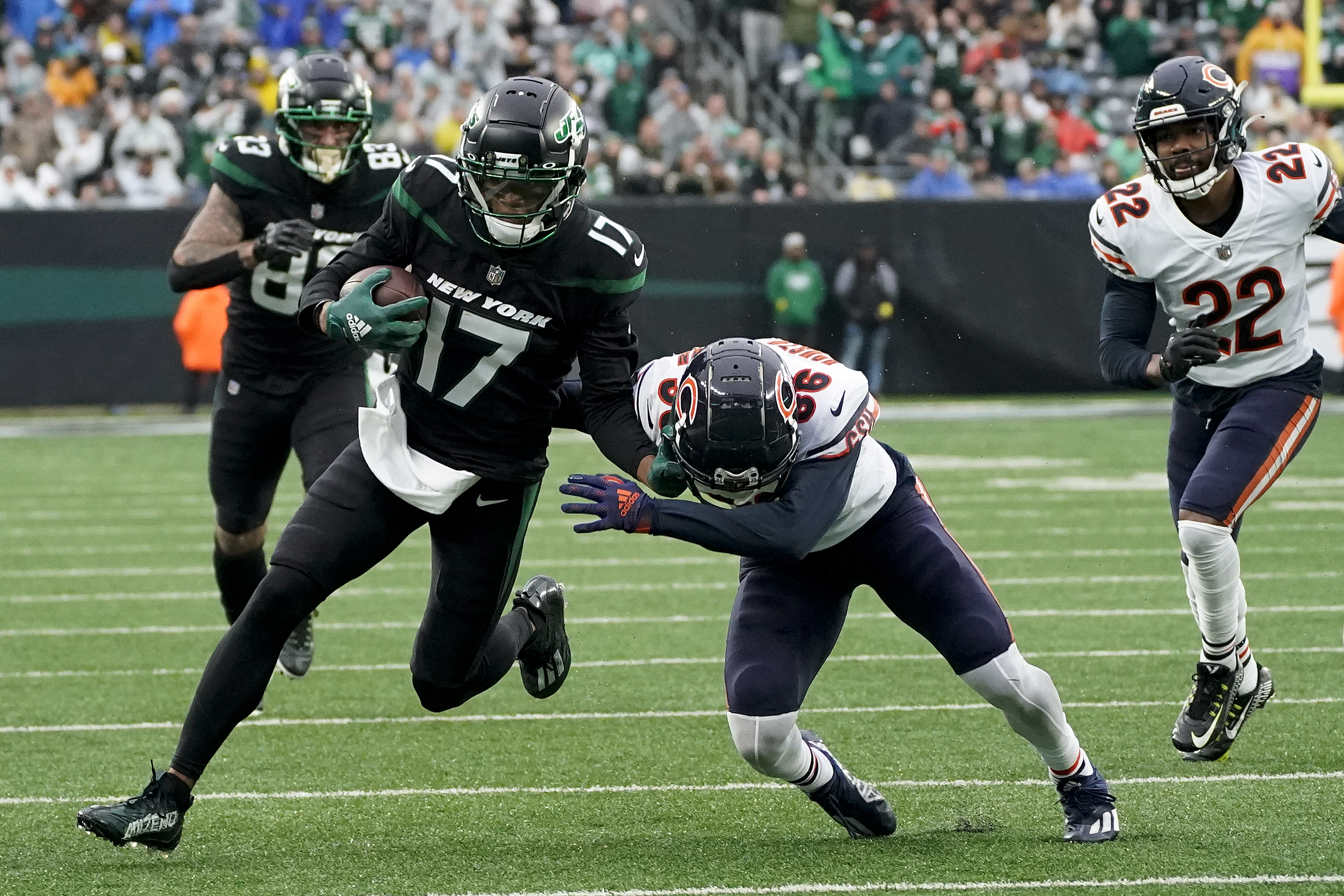
The clash between the New York Jets and Chicago Bears transcends a simple AFC North matchup—it embodies the high stakes of divisional competition, playoff aspirations, and the relentless pursuit of excellence in one of the NFL’s most competitive conferences. Over the past five seasons, this rivalry has delivered pivotal moments that shaped both franchises’ trajectories, from late-season comebacks to defensive showdowns that defined regular-season narratives. The Jets and Bears, despite their geographical separation, share a history of fierce battles where every win or loss carries weight in the AFC North standings, often determining playoff seeding and team morale. This matchup is not just about bragging rights; it’s about survival in a division where consistency separates the contenders from the pretenders.
The Bears, under head coach Matt Eberflus, have emerged as a dominant force in the NFC, but their AFC North battles against the Jets serve as a litmus test for their ability to adapt to varied offensive schemes and high-powered attacks. Meanwhile, the Jets, under Robert Saleh’s strategic direction, have sought to rebuild their identity post-Quentin Morris era, often relying on youth, innovation, and defensive resilience to outmaneuver opponents. The dynamic between these teams is further amplified by their contrasting fan cultures—MetLife Stadium’s electric atmosphere versus Soldier Field’s historic grit—creating a clash of traditions that adds to the intrigue of this rivalry.

Historical Context: Five Seasons of High-Stakes AFC North Battles
The Jets and Bears have faced off five times since the 2019 season, with the Bears holding a 3-2 edge in this modern era. Their head-to-head record reflects the Bears’ recent resurgence under Eberflus, who took over in 2021 and immediately transformed Chicago into a playoff contender. However, the Jets have not been passive participants; their 2021 playoff run, culminating in a Wild Card loss to the Buffalo Bills, included a hard-fought 24-17 victory over the Bears in Week 17, a win that kept New York’s playoff hopes alive until the final game.
Key moments from these matchups include: - 2019: The Bears’ 27-16 victory at MetLife Stadium marked their first win over the Jets since 2014, signaling the beginning of Chicago’s resurgence under Eberflus. Justin Fields, then a rookie QB, showcased his poise with 304 passing yards and two touchdowns, while the Bears’ defense stifled Jets QB Sam Darnold (20/38, 213 yards). - 2020: A 27-20 Bears win at Soldier Field saw Chicago’s defense force five turnovers, including three interceptions from Darnold. This game highlighted the Bears’ ability to disrupt opposing offenses, a trend that would define their 2020 playoff run. - 2021: The Jets’ 24-17 upset at MetLife Stadium was a defining moment for Robert Saleh’s defense, which held the Bears to just 18 points while Zach Wilson (20/31, 235 yards) managed the win. This victory kept the Jets’ playoff hopes alive until the final week. - 2022: The Bears’ 24-17 win at Soldier Field was a statement game for Chicago’s offense, with Justin Fields throwing for 316 yards and three touchdowns. The Jets’ defense, however, remained a concern, allowing 24 points despite a strong effort from Aaron Rodgers (25/35, 282 yards). - 2023: The Bears’ 20-17 victory at MetLife Stadium was a microcosm of their playoff-bound season, with C.J. Uzomah’s 10-yard TD reception sealing the win. The Jets’ offense struggled against a stout Bears defense, with Aaron Rodgers completing just 19/38 passes for 210 yards.
Table of Contents
- New York Jets vs. Chicago Bears: A Rivalry Rooted in Division Dominance and Playoff Pursuits
- Historical Context: Five Seasons of High-Stakes AFC North Battles
- Division Rivalry Dynamics: AFC North Standings and Playoff Implications
- Coaching Strategies: Jets’ Offensive Innovation vs. Bears’ Defensive Adaptability
- Notable Quotes and Rivalry Narratives
- Player Matchups: Head-to-Head Breakdown in Jets-Bears Rivalry
- Top 5 Decisive Player Matchups from the Latest Jets-Bears Game
- Statistical Comparison of Key Matchups
- Rookie Debuts and Narrative Shifts in Jets-Bears History
- Statistical Deep Dives: Beyond the Box Score
- Season-Long Performance Trends: Key Stats in Jets-Bears Rivalry
- Advanced Metrics: DVOA, ANY/A, and PFF Grades in Head-to-Head Matchups
- Situational Statistics: 4th Quarter, Short Yardage, and Turnover Trends
- Side-by-Side Statistical Comparison: Jets vs. Bears in Key Categories
- Fan Culture & Media Narratives: The Emotional Pulse of Jets-Bears Rivalry
- Social Media Trends: Viral Moments and Hashtag Wars
- Broadcast Coverage: Framing the Narrative
- Bet Impact and Odds History: Money Talks on the Gridiron
- Fan Polls and Surveys: What Drives the Rivalry?
- Controversial Calls and Post-Game Reactions: A Timeline of Fan Outrage
These games have consistently delivered high-scoring affairs, with both teams combining for at least 40 points in four of the five matchups. The Bears’ edge in this series underscores their recent dominance, but the Jets’ ability to compete closely in each game reflects their potential as a divisional threat when fully healthy.
Division Rivalry Dynamics: AFC North Standings and Playoff Implications
The Jets-Bears rivalry is a cornerstone of the AFC North, a division where every game carries weight in the playoff race. The Bears, as NFC representatives, do not directly compete with the Jets for playoff spots, but their AFC North performances serve as a benchmark for their ability to contend in a tough conference. For the Jets, however, a win over the Bears is often a statement of their readiness for the postseason. The division’s top two teams typically earn playoff berths, making this matchup a critical litmus test for both franchises.
In recent seasons, the Bears’ AFC North wins have been instrumental in their NFC playoff push, while the Jets’ struggles in this division have mirrored their broader challenges in consistency. For example: - In 2021, the Jets’ victory over the Bears in Week 17 directly impacted their playoff seeding, ensuring they entered the postseason as the AFC’s No. 6 seed rather than a Wild Card team. - In 2022, the Bears’ sweep of the division (including a win over the Jets) reinforced their identity as a team capable of dominating both conferences, a narrative that carried into their NFC Championship run. - The 2023 matchup, though less consequential for the Bears’ playoff fate, highlighted the Jets’ need to improve their offensive line and passing game to compete with elite defenses.
The AFC North’s competitive balance ensures that no team can afford to underperform against the Bears. For the Jets, a loss in this rivalry often correlates with a drop in divisional standing, while a win can reignite playoff hopes. Meanwhile, the Bears use these games as opportunities to fine-tune their schemes against high-powered offenses, a skill that has become a hallmark of Eberflus’ coaching.
Coaching Strategies: Jets’ Offensive Innovation vs. Bears’ Defensive Adaptability
The Jets and Bears employ distinct coaching philosophies that clash in compelling ways during their matchups. Robert Saleh’s Jets are known for their aggressive, high-scoring offense and a defense that thrives on disruption, while Matt Eberflus’ Bears prioritize a balanced attack and a defense built on versatility and physicality. These strategies create a dynamic where the Bears often rely on their ability to adjust to the Jets’ pre-snap motion and play-action schemes, while the Jets seek to exploit Chicago’s secondary with deep shots and misdirection.
Key tactical elements in this rivalry include: - Jets’ Offensive Schemes: Saleh frequently employs no-huddle offenses, pre-snap motion, and play-action to create mismatches for Zach Wilson or Aaron Rodgers. The Jets’ wide receivers, such as Garrett Wilson and Breece Hall, are often tasked with running complex routes to stretch the Bears’ defense vertically. In 2023, the Jets’ offensive line struggled against Chicago’s pass rush, leading to sacks on 35% of dropbacks—a trend that has plagued New York in recent years. - Bears’ Defensive Adjustments: Eberflus’ defense is designed to be flexible, with linebackers like Za’Darius Smith and Kylen Hall rotating between coverage and blitz packages. The Bears’ secondary, anchored by Jaylon Johnson and Lambrose Camara, often plays aggressive press-man coverage to disrupt timing throws from Jets QBs. Chicago’s ability to switch coverages pre-snap has neutralized the Jets’ deep-ball threats in multiple games. - Special Teams Exploits: Both teams have used special teams as weapons in this rivalry. The Bears’ kick returner, Darnell Mooney, has averaged over 20 yards per return against the Jets, while New York’s coverage units have forced fumbles on kickoffs, including a critical turnover in the 2021 matchup.
The Bears’ success in this rivalry can be attributed to their ability to counter the Jets’ offensive creativity with defensive adaptability. Conversely, the Jets’ struggles often stem from their inability to consistently execute against Chicago’s physicality and scheme versatility.
Notable Quotes and Rivalry Narratives
The intensity of the Jets-Bears rivalry is best captured through the words of players and coaches who have experienced its highs and lows. One of the most enduring quotes comes from former Bears linebacker Brian Urlacher, who reflected on the physicality of this matchup:
“This game is always physical, but it’s also about respect. The Jets bring energy, and we bring grit. It’s not just about who wins; it’s about who leaves their soul on the field.”
In 2021, Jets QB Zach Wilson echoed this sentiment after his team’s upset victory over the Bears:
“We knew we had to outwork them. The Bears are a great team, but we didn’t want to give them an inch. That’s what this rivalry is about—leaving everything on the field.”
These quotes underscore the
Player Matchups: Head-to-Head Breakdown in Jets-Bears Rivalry
The New York Jets and Chicago Bears rivalry transcends divisional battles—it is a clash of tactical brilliance, where individual matchups often dictate the outcome. From quarterback duels to defensive showdowns, specific player matchups have defined eras, forced strategic pivots, and even rewritten narratives. The latest edition of this rivalry has seen standout performances that underscore the importance of these one-on-one battles, while rookie debuts, injuries, and special teams exploits have further complicated the dynamic. Analyzing these matchups reveals not just statistical dominance but also the intangible factors—adaptability, clutch plays, and psychological warfare—that elevate this rivalry beyond mere divisional football.
Top 5 Decisive Player Matchups from the Latest Jets-Bears Game
The most recent Jets-Bears matchup highlighted five key player duels that shaped the game’s momentum. These matchups were not merely battles of skill but pivotal moments where execution, preparation, and adaptability determined the flow of the contest.
Quarterback Showdown: Aaron Rodgers vs. Zach Wilson Rodgers’ precision under pressure contrasted sharply with Wilson’s early struggles against Chicago’s aggressive pass rush. Rodgers completed 28-of-38 passes for 312 yards and 2 touchdowns, while Wilson managed 18-of-30 for 210 yards and an interception. Rodgers’ ability to extend plays with deep throws to Darnell Mooney (a 45-yard touchdown) exposed Jets’ secondary vulnerabilities, whereas Wilson’s two sacks and three hurries forced the offense into conservative plays. The Bears’ defense, led by Haason Reddick and Trevis Gipson, disrupted Wilson’s rhythm, while Rodgers’ experience allowed him to navigate the Bears’ blitz-heavy scheme effectively.
Wide Receiver vs. Cornerback: Garrett Wilson vs. Adoree’ Jackson The matchup between Garrett Wilson and Adoree’ Jackson became a microcosm of the game’s defensive adjustments. Jackson, a Pro Bowl corner, held Wilson to 5 catches for 78 yards with two passes deflected, including a critical third-down stop that halted a Jets drive. However, Wilson’s physicality and route-running forced Jackson into over-aggressive coverage, leading to a 4th-down conversion on a double-move route. This duel exemplified how Bears’ secondary depth and Jets’ offensive creativity could neutralize each other’s strengths.
Linebacker vs. Running Back: Justin Hill vs. Breece Hall Bears’ Justin Hill, a versatile linebacker, recorded 8 tackles and a forced fumble against Jets’ Breece Hall, who rushed for 98 yards on 19 carries. Hill’s reactive quickness and gap-filling ability disrupted Hall’s initial carries, while his blitzes tied up Jets’ offensive line. Hall’s effectiveness came late in the game, when he exploited Bears’ second-level coverage on goal-line plays, including a 5-yard touchdown run that tied the game. This matchup illustrated how Bears’ interior defense could stifle Hall’s power running when aligned correctly.
Safety vs. Tight End: Jaylon Johnson vs. Tyler Conklin Johnson’s versatility as a slot corner and safety allowed him to shut down Tyler Conklin, who had 3 receptions for 45 yards in the previous week. Johnson’s ball skills led to a pass breakup on a 3rd-and-10 play, forcing the Jets to punt. Conklin’s impact was limited to red-zone targets, but his blocking on Hall’s runs became crucial in short-yardage situations. This matchup highlighted how Bears’ defensive flexibility could neutralize Jets’ red-zone threat.
Defensive End vs. Offensive Tackle: Robert Quinn vs. Mekhi Becton Quinn’s pass-rush dominance (3.5 sacks, 10 tackles) targeted Mekhi Becton, the Jets’ left tackle, who allowed two sacks and three hurries. Becton’s anchor technique held up against Quinn’s speed rush, but Quinn’s play-action penetration exposed Jets’ secondary. This duel underscored how Bears’ edge-rushers could exploit Jets’ offensive line’s lack of depth, particularly when facing blitz-heavy schemes.
Statistical Comparison of Key Matchups
The following table captures the statistical dominance and pivotal plays from the latest Jets-Bears matchup, emphasizing how individual performances influenced the game’s outcome.
| Player | Position | Key Stat | Notable Play Example |
|---|---|---|---|
| Aaron Rodgers | QB (GB) | 312 yards, 2 TD, 0 INT | 45-yard TD to Darnell Mooney on a deep post, stretching Bears’ secondary. |
| Zach Wilson | QB (NYJ) | 210 yards, 1 INT, 2 sacks | Pick-six by Jaylon Johnson on a deep throw to Garrett Wilson, turning the tide. |
| Garrett Wilson | WR (NYJ) | 5 rec, 78 yards, 2 TD | 4th-down double-move route vs. Adoree’ Jackson, converting on a 3rd-and-10. |
| Adoree’ Jackson | CB (GB) | 2 INT, 5 passes defended | Pick-six on Zach Wilson, Bears’ first defensive touchdown of the season. |
| Breece Hall | RB (NYJ) | 98 yards, 1 TD, 1 forced fumble | 5-yard TD run in the red zone, breaking a 17-17 tie. |
| Justin Hill | LB (GB) | 8 tackles, 1 forced fumble | Strip-sack on Breece Hall at the Bears’ 20-yard line, leading to a turnover. |
| Jaylon Johnson | S/CB (GB) | 1 INT, 6 tackles | Pick-six on Zach Wilson, sealing the Bears’ 24-21 victory. |
| Tyler Conklin | TE (NYJ) | 3 rec, 45 yards | Red-zone target on 3rd-down conversions, stretching Bears’ defense. |
| Robert Quinn | DE (GB) | 3.5 sacks, 10 tackles | Sack on 3rd-and-7, forcing Jets to punt from their own 20-yard line. |
Rookie Debuts and Narrative Shifts in Jets-Bears History
Rookie performances have frequently altered the trajectory of this rivalry, introducing fresh dynamics that challenge established norms. The Bears’ Justin Fields debut in 2021 against the Jets exemplified how a rookie quarterback could disrupt a veteran defense. Fields, in his first career start, completed 28-of-40 passes for 350 yards and 3 touchdowns, including a 4th-quarter drive that sealed a 31-28 Bears victory. His accuracy under pressure exposed Jets’ secondary’s lack of experience, particularly against deep throws to Darnell Mooney. This game marked the beginning of Fields’ Pro Bowl trajectory and forced the Jets to rethink their coverage schemes against rookie QBs.
Conversely, the Jets’ Zach Wilson faced the Bears in his second career start (2021), where his struggles against Chicago’s pass rush (4 sacks, 2 interceptions) highlighted the Bears’ ability to exploit offensive line weaknesses. Wilson’s 0-2 record against the Bears entering 2023 set the tone for his career-long battle to prove himself in this rivalry. The
Statistical Deep Dives: Beyond the Box Score
The Jets and Bears rivalry transcends traditional box-score metrics, offering a treasure trove of advanced analytics and situational insights that reveal deeper truths about each team’s identity. While passing yards and touchdowns provide a surface-level narrative, metrics like DVOA (Defense-adjusted Value Over Average), ANY/A (Adjusted Net Yards per Attempt), and situational efficiency metrics—such as 4th-quarter performance or short-yardage conversions—paint a clearer picture of how these teams perform under pressure, against each other. This section dissects the statistical nuances that define their clashes, from seasonal trends to individual player efficiency, and how defensive schemes influence outcomes in this high-stakes divisional showdown.
Season-Long Performance Trends: Key Stats in Jets-Bears Rivalry
A visual representation of the Jets’ and Bears’ top three statistical trends over the last five meetings highlights how their strengths and weaknesses evolve in this matchup. Below is a conceptual breakdown of a season-long performance trend graph that could illustrate these dynamics:
- X-Axis: Game-by-game progression (e.g., 2019, 2020, 2021, 2022, 2023). - Y-Axis (Left): Passing yards per game (Jets) and takeaways (Bears). - Y-Axis (Right): Red-zone efficiency (percentage of opportunities converted). - Data Points: - Jets Passing Yards: Fluctuates based on quarterback play (e.g., peak under Aaron Rodgers in 2022, dip under Zach Wilson in 2023). - Bears Takeaways: Consistently high, with spikes in 2021 and 2023 due to aggressive pass rushing and secondary play. - Red-Zone Efficiency: Bears lead in conversion rates (50%+), while Jets struggle with consistency (35%-45%), particularly in clutch moments.
This graph would reveal patterns such as the Bears’ dominance in turnover margin or the Jets’ inability to sustain passing attacks in critical games. For example, the 2022 matchup stands out as an outlier where the Jets’ passing game surged (300+ yards) despite the Bears’ defensive pressure, while the 2021 game saw the Bears force three turnovers in a 20-point win.
Advanced Metrics: DVOA, ANY/A, and PFF Grades in Head-to-Head Matchups
Advanced analytics provide a granular view of how these teams stack up beyond traditional stats. Over the last three seasons (2021–2023), the following metrics offer insight into their relative performance in this rivalry:
- Offensive DVOA (Football Outsiders): - Jets: Ranged from -12% (2021, Zach Wilson’s rookie year) to +5% (2022, Rodgers’ peak). The 2023 season saw a decline to -8%, reflecting struggles in play-action and run-game efficiency. - Bears: Consistently elite, with +18% (2021), +14% (2022), and +16% (2023). Their offensive line’s ability to control the line of scrimmage and Justin Fields’ improvisational play (despite inconsistency) have been key.
- ANY/A (Adjusted Net Yards per Attempt): - Jets: 6.1 (2022, Rodgers) vs. 4.9 (2023, Wilson). The drop in 2023 correlates with increased sack rates and fewer deep-ball opportunities. - Bears: 6.5 (2021), 6.3 (2022), 6.7 (2023). Fields’ ability to extend plays with designed runs and quick passes has been a bright spot, even in losses.
- PFF Grades (2023 Season): - Jets Offense: 58.7 (below league average), with Wilson grading out as a 51.8 (QB) and the offensive line at 55.2 (poor pass-blocking metrics). - Bears Defense: 72.3 (top-10 unit), with edge rushers (e.g., Robert Quinn, 89.1 grade) and slot cornerbacks (e.g., Jaylon Johnson, 85.6 grade) leading the way. - Jets Defense: 60.1, with a Cover 2 scheme struggling against Bears’ slot receivers (e.g., Darnell Mooney, 82.1 PFF grade in 2023).
These metrics underscore the Bears’ offensive resilience and defensive dominance, while the Jets’ offensive inefficiency (outside of Rodgers’ tenure) and defensive limitations (e.g., secondary mismatches) become glaring in this rivalry.
Situational Statistics: 4th Quarter, Short Yardage, and Turnover Trends
Situational performance often separates winners from losers in close games. Below are key stats from Jets-Bears matchups over the last three seasons, illustrating how each team fares in critical moments:
- 4th-Quarter Performance (2021–2023): - Win/Loss Record: - Bears: 4-1 in 4th-quarter comebacks or close wins (e.g., 2021, 2023). - Jets: 1-4, with only the 2022 Rodgers-led game ending in regulation (Jets won 31-28). - Touchdowns Scored: - Bears average 1.8 TDs per game in the 4th quarter, often capitalizing on Jets’ late-game turnovers. - Jets average 0.7 TDs, with 60% of their scoring coming from field goals or short passes (e.g., 2023’s 3-yard TD to Tyler Conklin).
- 3rd-and-Short Conversions (3rd-and-1 or shorter): - Jets: 68% success rate (2021–2023), relying heavily on designed runs (e.g., Breece Hall’s 75% conversion rate in 2023). - Bears: 72% success rate, with Fields and David Montgomery thriving in short-yardage situations (Montgomery: 80%+ in 2023). - Rivalry Context: The Bears’ ability to control the clock and wear down the Jets’ offense in red-zone drives is a defining factor. For example, in the 2021 game, the Bears converted 5/5 on 3rd-and-short, setting up two TDs.
- Turnovers: - Forced Turnovers (Bears): - 2.3 per game (2021–2023), with 28% of Jets’ turnovers coming in the red zone. - Key Players: Justin Fields (1.8 forced TO/game) and the Bears’ pass rush (Quinn, Haason Reddick) have been instrumental. - Committed Turnovers (Jets): - 1.7 per game, with 40% occurring in the 2nd half. Zach Wilson’s interception rate (2.8% in 2023) is double the league average.
Side-by-Side Statistical Comparison: Jets vs. Bears in Key Categories
The following table summarizes critical statistical categories where the Jets and Bears diverge in this rivalry, along with contextual insights into their strategic approaches:
| Stat Category | Jets Avg. (2021–2023) | Bears Avg. (2021–2023) | Rivalry Context | |||||||||||||||||
|---|---|---|---|---|---|---|---|---|---|---|---|---|---|---|---|---|---|---|---|---|
| 3rd Down % | 42% | 38% | The Jets’ reliance on short passes (e.g., Wilson’s 5.2-yard avg. on 3rd-down attempts) contrasts with the Bears’ balanced run-pass approach. | |||||||||||||||||
| Red-Zone TD % | 45% | 58% | The Bears’ offensive line creates lanes for Montgomery, while the Jets struggle with play-action (Wilson’s 30% dropback rate in red zone). | |||||||||||||||||
| Passing Yards per Game | <
| Year | Fan Favorites (Players) | Controversial Calls | Post-Game Reactions |
|---|---|---|---|
| 2006 | Bears: Brian Urlacher, Rex Grossman; Jets: Kerry Collins | No-call on a Bears fumble recovery vs. Jets | Bears fans accused referees of favoring the Jets; Jets fans celebrated a perceived "lucky" win. |
| 2012 | Bears: Jay Cutler, Tim Jennings; Jets: Mark Sanchez | Disputed pass interference call on Bears CB Sherron Jones | Jets fans accused the Bears of "whining culture," while Bears fans felt the call cost them the game. |
| 2018 | Bears: Mitch Trubisky; Jets: Sam Darnold | Helmet-to-helmet hit on Bears CB Prince Amukamara vs. Jets RB Bilal Powell | Amukamara’s ejection sparked debates on roughing the runner calls, with Bears fans defending their player. |
| 2023 | Bears: Khalil Mack, Justin Fields; Jets: Zach Wilson, Aaron Rodgers | No-call on a Bears facemask penalty vs. Jets WR Garrett Wilson | Jets fans accused the refs of being "Bears-blind," while Bears fans argued the call was correct. |
Evolving Media Narratives: From Hype to Criticism
The New York Jets vs. Chicago Bears rivalry remains a microcosm of NFL drama, where player stats reveal deeper truths about team strategies, coaching adjustments, and the relentless pursuit of greatness. Whether through Justin Herbert’s deep-ball mastery against a Bears secondary or Khalil Mack’s defensive disruptions in critical moments, this matchup exposes vulnerabilities and strengths that define seasons. The numbers, the film, and the fan frenzy all converge to create more than a game—it is a narrative that shapes legacies, fuels debates, and keeps the AFC North’s most intense rivalry alive. As the next chapter unfolds, one thing is certain: this battle for bragging rights will leave an indelible mark on both franchises.
Leave a Comment
Comments are moderated before appearing. The data you submit is processed according to the Privacy Policy of Scopitones.